Senior Trip Photography Spots in Southeast Asia
{ "article": [ { "title": "Senior Trip Photography Spots in Southeast Asia", "meta_description": "Capture stunning photos at senior trip photography spots in Southeast Asia. Iconic temples, vibrant markets, and natural wonders.", "content": "Capture stunning photos at senior trip photography spots in Southeast Asia. Iconic temples, vibrant markets, and natural wonders.\n\n
\n\n
Unveiling Southeast Asia's Photographic Charms
\n\nSoutheast Asia is a photographer's paradise, a vibrant tapestry of ancient traditions, bustling modern cities, and breathtaking natural landscapes. For senior travelers, it offers an unparalleled opportunity to capture stunning memories, from the serene beauty of ancient temples to the lively chaos of street markets and the tranquil allure of pristine beaches. This guide will delve into the best photography spots across the region, offering insights into what makes them special and how to make the most of your camera gear. We'll also recommend specific products, discuss their ideal use cases, compare different options, and provide approximate pricing to help you prepare for your photographic adventure.\n\nIconic Temples and Spiritual Sanctuaries Photography Guide
\n\nSoutheast Asia is synonymous with magnificent temples, each offering unique architectural beauty and spiritual ambiance. These sites are not just places of worship but also incredible backdrops for your senior trip photos.\n\nAngkor Wat Siem Reap Cambodia Photography Tips
\n\nAngkor Wat, a UNESCO World Heritage site, is an absolute must-visit. The sheer scale and intricate carvings are awe-inspiring. For the best light, aim for sunrise or sunset. The reflection pools in front of the main temple offer iconic shots, especially at dawn when the sky explodes with color. Don't forget to explore Angkor Thom, Bayon with its smiling faces, and Ta Prohm, where ancient trees intertwine with stone ruins.\n\nBorobudur Temple Yogyakarta Indonesia Photography Insights
\n\nBorobudur, the world's largest Buddhist temple, is another sunrise spectacle. The mist rising over the surrounding volcanoes as the sun illuminates the stupas creates a magical scene. Focus on the intricate relief carvings and the bell-shaped stupas, some of which contain Buddha statues. A wide-angle lens is essential here to capture the grandeur.\n\nShwedagon Pagoda Yangon Myanmar Golden Hour Photography
\n\nThe Shwedagon Pagoda, gleaming with gold, is best photographed during the golden hour, either sunrise or sunset. The light reflects beautifully off the gold, creating a warm, ethereal glow. Capture the devotion of the pilgrims, the intricate details of the smaller shrines, and the overall majesty of the main stupa. A telephoto lens can be useful for isolating details.\n\nWat Arun Bangkok Thailand Riverside Photography
\n\nWat Arun, the Temple of Dawn, with its distinctive prangs adorned with colorful porcelain, is stunning from across the Chao Phraya River, especially at sunset. Consider a long exposure shot to capture the movement of the river and the lights of the city. You can also get great close-up shots of the intricate mosaic work on the temple itself.\n\nVibrant Markets and Bustling Cityscapes Photography Techniques
\n\nSoutheast Asia's cities are a sensory overload in the best way possible. Their markets, street food stalls, and urban landscapes provide endless opportunities for dynamic and colorful photography.\n\nChatuchak Weekend Market Bangkok Thailand Street Photography
\n\nChatuchak Weekend Market is a kaleidoscope of sights, sounds, and smells. This is a fantastic place for street photography. Look for interesting characters, vibrant stalls, and unique products. Be respectful when taking photos of people, and always ask for permission if you're getting a close-up. A prime lens (like a 50mm) can be great for isolating subjects in a busy environment.\n\nHoi An Ancient Town Vietnam Lantern Photography
\n\nHoi An's Ancient Town is famous for its colorful lanterns, especially at night. The reflections in the Thu Bon River add another dimension to your photos. Experiment with different shutter speeds to capture the glow of the lanterns and the movement of boats. A tripod is highly recommended for low-light photography here.\n\nKuala Lumpur Malaysia Petronas Towers Cityscape Photography
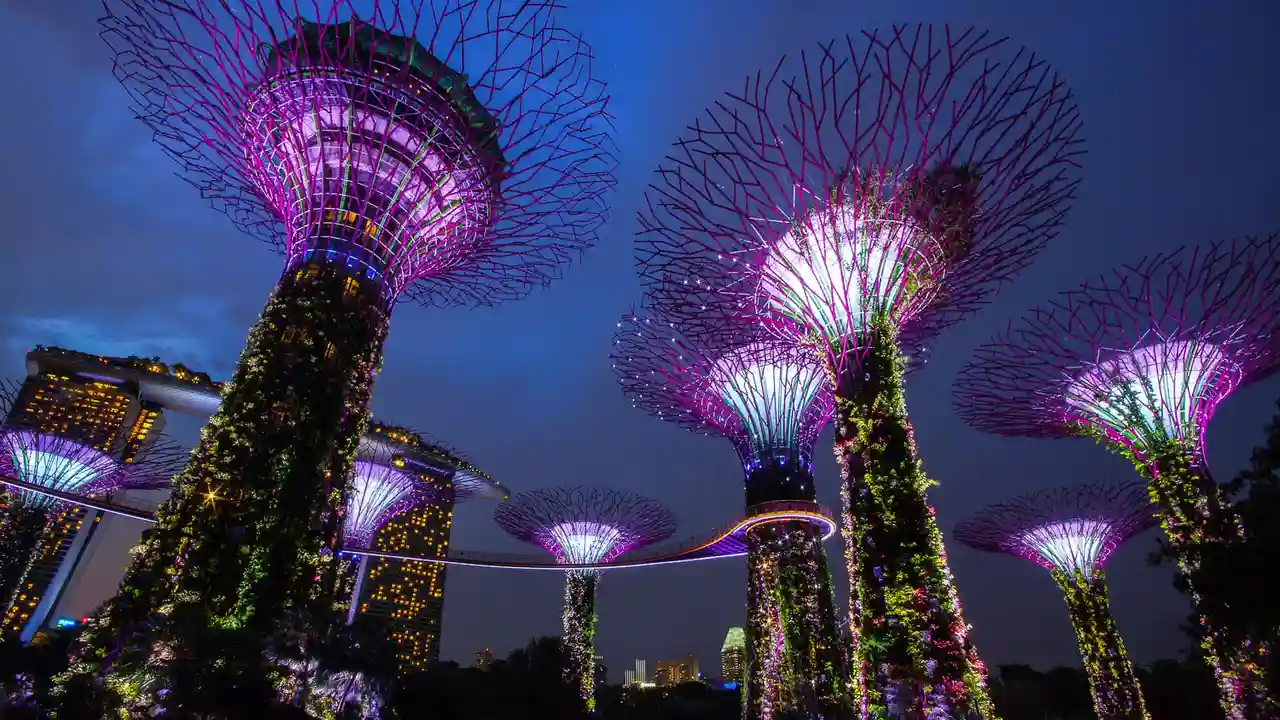
\n\nThe Petronas Towers are an iconic symbol of Kuala Lumpur. For a classic shot, head to KLCC Park. At night, the towers are beautifully lit, offering stunning long-exposure opportunities. You can also find great vantage points from rooftop bars for panoramic cityscapes. A wide-angle lens is crucial for capturing the full height of the towers.\n\nSingapore Gardens by the Bay Supertree Grove Night Photography
\n\nGardens by the Bay, particularly the Supertree Grove, offers a futuristic and visually striking experience. The 'Garden Rhapsody' light and sound show at night is a prime photography opportunity. Experiment with different angles and compositions to capture the scale and unique design of the Supertrees. Again, a tripod will be your best friend here.\n\nNatural Wonders and Scenic Landscapes Photography Essentials
\n\nBeyond the urban sprawl and ancient ruins, Southeast Asia boasts incredible natural beauty, from pristine beaches to lush rice paddies and majestic mountains.\n\nHalong Bay Vietnam Limestone Karst Photography
\n\nHalong Bay's emerald waters and towering limestone karsts create a mystical landscape. Capture the traditional junk boats sailing through the mist, the hidden caves, and the floating villages. A polarizing filter can help reduce glare on the water and enhance the colors of the sky and sea.\n\nPalawan Philippines El Nido Island Hopping Photography
\n\nEl Nido in Palawan is renowned for its stunning lagoons, white-sand beaches, and dramatic limestone cliffs. Island hopping tours offer endless photographic opportunities. Focus on the vibrant turquoise waters, the lush greenery, and the unique rock formations. A waterproof camera or housing is highly recommended for capturing underwater shots or protecting your gear from splashes.\n\nBali Indonesia Rice Terraces and Volcano Photography
\n\nBali's Tegallalang Rice Terraces offer a beautiful tiered landscape, especially at sunrise or sunset when the light casts long shadows. Mount Batur and Mount Agung provide dramatic volcanic backdrops. Look for local farmers working in the fields for a human element in your landscape shots. A drone can offer unique aerial perspectives here.\n\nDoi Inthanon National Park Chiang Mai Thailand Waterfall Photography
\n\nDoi Inthanon, Thailand's highest peak, is home to stunning waterfalls like Wachirathan and Sirithan. For waterfall photography, use a slow shutter speed to create a silky, ethereal effect for the water. A tripod is essential for this technique. Also, look for the vibrant flora and fauna within the park.\n\nEssential Photography Gear for Your Senior Trip
\n\nHaving the right equipment can significantly enhance your photography experience. Here's a breakdown of recommended gear, comparing options and providing approximate pricing.\n\nCamera Bodies Mirrorless vs DSLR for Travel
\n\nMirrorless Cameras: These are generally lighter and more compact than DSLRs, making them ideal for travel. They offer excellent image quality and advanced features. Many have in-body image stabilization (IBIS), which is great for handheld shots in low light.
\n- \n
- Sony Alpha a6700: A fantastic APS-C mirrorless camera. It's compact, has excellent autofocus, and produces high-quality images. Great for both stills and video. \n
- Ideal Use: General travel, street photography, landscapes, and portraits. \n
- Pros: Compact, fast autofocus, good low-light performance, excellent video capabilities. \n
- Cons: Smaller sensor than full-frame, battery life can be shorter than DSLRs. \n
- Approximate Price: $1,400 (body only) \n
- \n
- Fujifilm X-T5: Known for its retro design, excellent image quality (especially Fujifilm's color science), and tactile controls. It's a joy to shoot with. \n
- Ideal Use: Street photography, travel, portraiture, and those who appreciate a more traditional shooting experience. \n
- Pros: Superb image quality, beautiful colors, great ergonomics, robust build. \n
- Cons: Autofocus can be slightly less advanced than Sony in some scenarios, video features are good but not class-leading. \n
- Approximate Price: $1,700 (body only) \n
DSLR Cameras: While heavier, DSLRs offer robust build quality, excellent battery life, and a vast selection of lenses. They are still a solid choice for many photographers.
\n- \n
- Canon EOS Rebel T8i (250D): A great entry-level DSLR that's relatively compact for a DSLR. It offers good image quality and a user-friendly interface. \n
- Ideal Use: Beginners, general travel, those who prefer an optical viewfinder. \n
- Pros: Good image quality, long battery life, wide range of compatible lenses. \n
- Cons: Heavier than mirrorless, optical viewfinder doesn't show exposure changes in real-time. \n
- Approximate Price: $750 (body only) \n
Lenses for Southeast Asia Travel Photography
\n\nVersatile Zoom Lens: A good all-around lens is crucial for travel, allowing you to capture a wide range of scenes without constantly changing lenses.
\n- \n
- Sony E 18-135mm f/3.5-5.6 OSS (for Sony APS-C): This lens offers a great zoom range, from wide-angle landscapes to telephoto for distant subjects. It's relatively compact and has optical image stabilization. \n
- Ideal Use: All-in-one travel lens, landscapes, portraits, street scenes. \n
- Pros: Wide focal range, good image quality for a superzoom, compact. \n
- Cons: Variable aperture means less light gathering at the telephoto end. \n
- Approximate Price: $600 \n
- \n
- Fujifilm XF 18-55mm f/2.8-4 R LM OIS (for Fujifilm X-mount): Often considered a kit lens, but it's an excellent performer with a relatively fast aperture for a zoom. \n
- Ideal Use: General travel, low-light situations, portraits. \n
- Pros: Good image quality, relatively fast aperture, optical image stabilization. \n
- Cons: Shorter zoom range than some other travel zooms. \n
- Approximate Price: $700 \n
Wide-Angle Lens: Essential for capturing expansive landscapes, grand temples, and cityscapes.
\n- \n
- Tamron 11-20mm f/2.8 Di III-A RXD (for Sony APS-C): A fantastic wide-angle zoom with a constant f/2.8 aperture, great for low light and creating shallow depth of field. \n
- Ideal Use: Landscapes, architecture, astrophotography, tight spaces. \n
- Pros: Fast aperture, excellent image quality, compact. \n
- Cons: Limited zoom range. \n
- Approximate Price: $800 \n
Prime Lens (e.g., 50mm f/1.8 or 35mm f/1.8): A prime lens offers superior image quality, a wider aperture for low light and beautiful background blur (bokeh), and encourages more thoughtful composition.
\n- \n
- Sony FE 50mm f/1.8 (for Sony E-mount, can be used on APS-C): An affordable and lightweight lens that produces sharp images with lovely bokeh. \n
- Ideal Use: Portraits, street photography, low-light situations, food photography. \n
- Pros: Excellent image quality for the price, very light, great for bokeh. \n
- Cons: Fixed focal length means no zoom. \n
- Approximate Price: $250 \n
Tripods for Stable Shots and Low Light
\n\nA tripod is indispensable for low-light photography (sunrises, sunsets, night shots), long exposures (waterfalls, city lights), and self-portraits. Look for a travel-friendly option that's lightweight yet sturdy.
\n- \n
- Manfrotto Befree Advanced Aluminum Travel Tripod: A popular choice for travelers. It's relatively compact when folded, sturdy enough for most mirrorless and DSLR setups, and easy to set up. \n
- Ideal Use: Landscapes, low-light, long exposures, self-portraits. \n
- Pros: Good balance of portability and stability, quick setup. \n
- Cons: Can still be a bit bulky for ultra-light travel. \n
- Approximate Price: $180 \n
- \n
- Joby GorillaPod 3K Kit: Not a traditional tripod, but incredibly versatile. Its flexible legs can wrap around objects, making it great for uneven surfaces or attaching to railings. \n
- Ideal Use: Vlogging, creative angles, attaching to objects, lightweight support. \n
- Pros: Extremely versatile, compact, lightweight. \n
- Cons: Not as tall or stable as a full-sized tripod for heavy setups. \n
- Approximate Price: $70 \n
Filters Enhancing Your Southeast Asia Photos
\n\nCircular Polarizer (CPL) Filter: Reduces glare from water and non-metallic surfaces, deepens blue skies, and enhances color saturation. Essential for landscapes and scenes with water.
\n- \n
- Hoya NXT Plus CIR-PL Filter: A good quality, affordable option that effectively reduces reflections and enhances colors. \n
- Ideal Use: Landscapes, seascapes, reducing glare on water or glass. \n
- Pros: Improves color saturation, reduces reflections. \n
- Cons: Can reduce light entering the lens by about 1-2 stops. \n
- Approximate Price: $40-$80 (depending on size) \n
Neutral Density (ND) Filter: Reduces the amount of light entering the lens, allowing you to use slower shutter speeds in bright conditions. Great for silky water effects or blurring motion in busy scenes.
\n- \n
- K&F Concept Variable ND Filter: A variable ND filter allows you to adjust the light reduction, offering more flexibility than fixed ND filters. \n
- Ideal Use: Long exposure photography (waterfalls, clouds, busy streets), shooting wide open in bright light. \n
- Pros: Versatile, allows for creative motion blur. \n
- Cons: Can sometimes introduce a color cast at extreme settings. \n
- Approximate Price: $50-$100 (depending on size and range) \n
Camera Bags Protecting Your Gear on the Go
\n\nA good camera bag protects your equipment and makes it easy to access. Consider a backpack for longer excursions or a sling bag for quick access in urban environments.
\n- \n
- Peak Design Everyday Backpack 20L: A highly versatile and well-designed backpack with excellent organization and quick side access. \n
- Ideal Use: Day trips, carrying multiple lenses, general travel. \n
- Pros: Excellent organization, durable, stylish, quick access. \n
- Cons: Can be pricey. \n
- Approximate Price: $280 \n
- \n
- Lowepro Slingshot SL 250 AW III: A comfortable sling bag that allows you to swing it around for quick camera access without taking it off. \n
- Ideal Use: Street photography, urban exploration, quick access to gear. \n
- Pros: Fast access, comfortable for walking, built-in rain cover. \n
- Cons: Less capacity than a backpack, can feel unbalanced with heavy gear. \n
- Approximate Price: $100 \n
Drones for Aerial Perspectives and Unique Shots
\n\nDrones offer a unique perspective, allowing you to capture breathtaking aerial shots of landscapes, coastlines, and even cityscapes (where permitted).
\n- \n
- DJI Mini 4 Pro: This drone is incredibly compact (under 250g, meaning fewer regulations in many places), yet it packs a powerful camera with excellent image quality and obstacle avoidance. \n
- Ideal Use: Landscapes, coastal views, unique perspectives of temples (check local regulations!), travel vlogging. \n
- Pros: Ultra-portable, excellent camera, good flight time, advanced features for its size. \n
- Cons: Battery life is limited, can be affected by strong winds, strict regulations in some areas. \n
- Approximate Price: $950 (Fly More Combo) \n
Action Cameras for Adventure and Underwater Photography
\n\nFor water activities, adventure sports, or just general rugged use, an action camera is indispensable.
\n- \n
- GoPro HERO12 Black: The industry standard for action cameras. It's waterproof, incredibly durable, and shoots stunning 5.3K video and high-resolution photos. \n
- Ideal Use: Snorkeling, diving, kayaking, hiking, general adventure, vlogging. \n
- Pros: Extremely durable, waterproof without extra housing, excellent video stabilization, wide field of view. \n
- Cons: Small sensor size limits low-light performance, fixed lens. \n
- Approximate Price: $400 \n
Smartphone Photography Maximizing Your Mobile Device
\n\nDon't underestimate the power of your smartphone! Modern smartphones have incredible cameras that are perfect for quick snaps, sharing on social media, and even high-quality images in good light.
\n- \n
- iPhone 15 Pro Max / Samsung Galaxy S24 Ultra: These top-tier smartphones offer multiple lenses (wide, ultrawide, telephoto), advanced computational photography, and excellent video capabilities. \n
- Ideal Use: Everyday photos, quick snaps, social media sharing, casual video, backup camera. \n
- Pros: Always with you, easy to use, instant sharing, great for casual shots. \n
- Cons: Smaller sensor limits low-light performance compared to dedicated cameras, less control over settings. \n
- Approximate Price: $1,200 - $1,400 \n
:max_bytes(150000):strip_icc()/277019-baked-pork-chops-with-cream-of-mushroom-soup-DDMFS-beauty-4x3-BG-7505-5762b731cf30447d9cbbbbbf387beafa.jpg)